

Business AI Risks and Controls: A Checklist for Safe AI Adoption
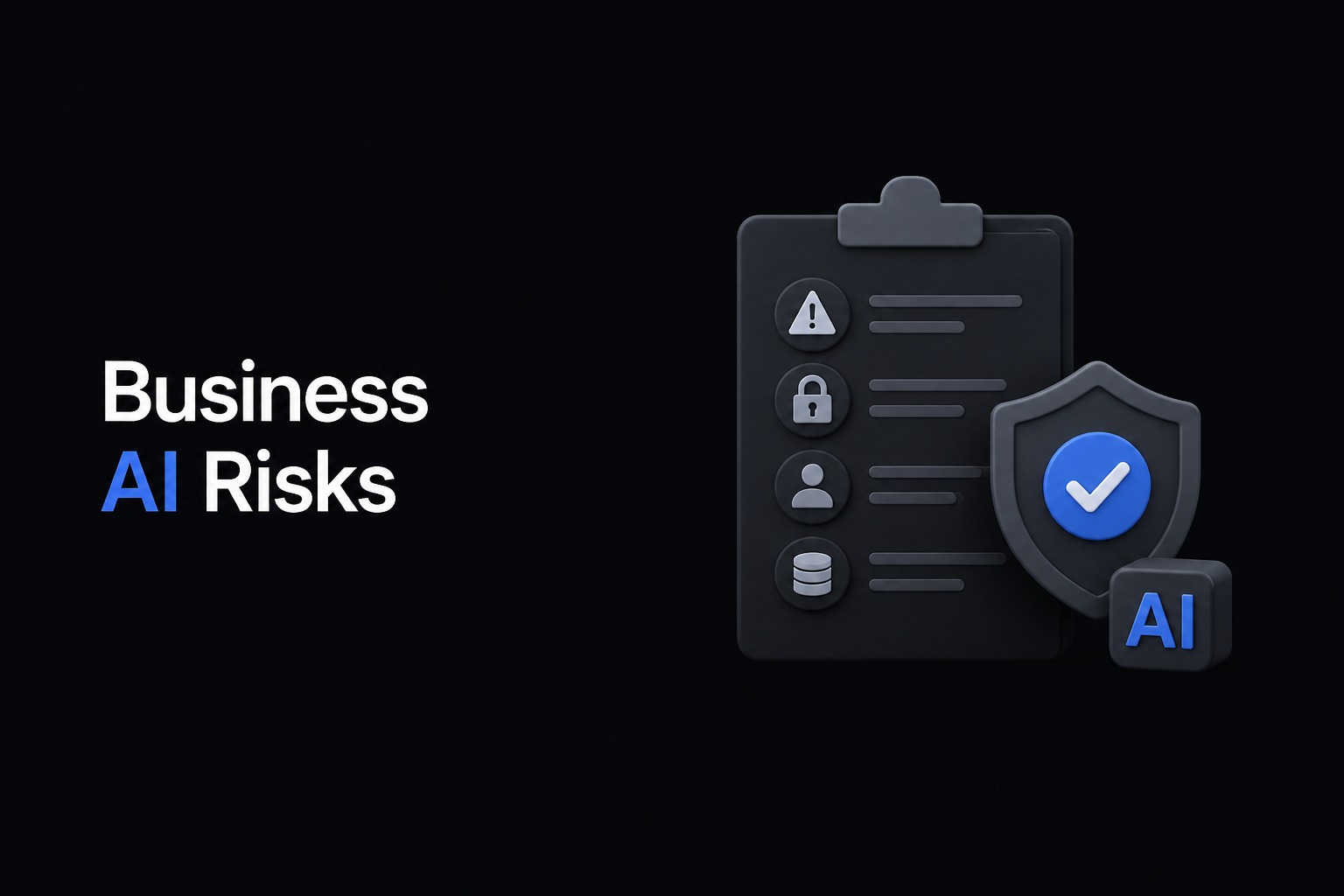
Businesses increasingly integrate AI tools to enhance productivity and decision-making, yet uncontrolled AI adoption can expose companies to operational, security, and compliance risks. This guide helps marketing teams and business leaders understand common AI risks and implement controls to protect their business systems while maximizing the benefits of AI work.
Key Takeaways
- Unmanaged AI adoption risks include data leaks, bias, and workflow disruptions.
- Implementing a clear AI usage policy balances free AI access with security.
- Automate AI workflows with tools like Claude AI automation for consistent control.
- Training and oversight reduce errors and improve AI work quality.
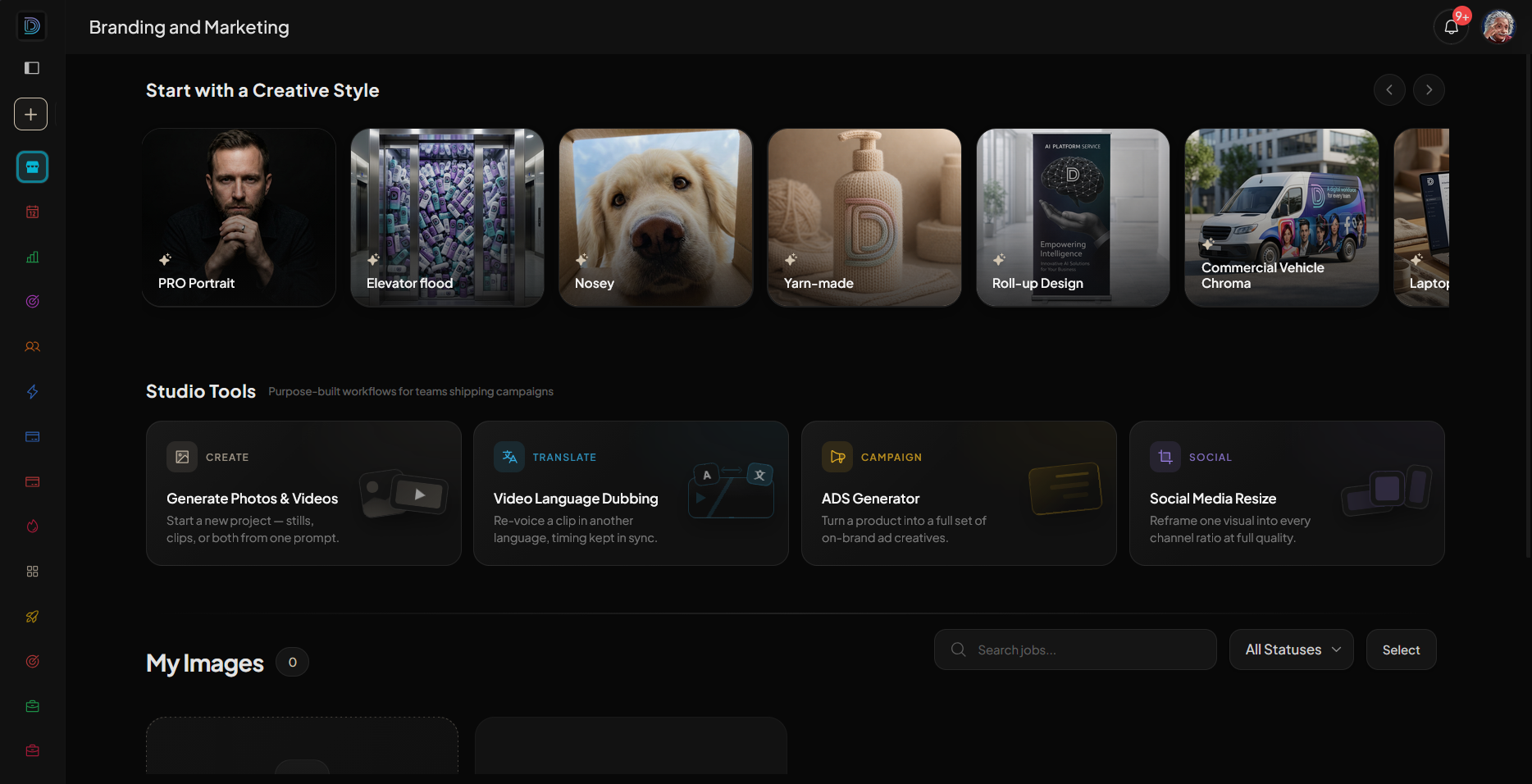
- An integrated business system like DIMA AI centralizes AI tools and approval flows.
- Data Security Risks: Sensitive business or customer information can leak if AI tools are not properly vetted or secured.
- Compliance Violations: Improper AI use may breach industry regulations or privacy laws.
- Bias and Inaccuracy: AI outputs can perpetuate biases or produce errors without human review.
- Workflow Disruptions: Overreliance on free AI tools without integration causes inefficiencies and errors.
- Usage Policies: Define who can use AI tools, for what purposes, and under what conditions.
- Approval Workflows: Use business systems to enforce human review before publishing AI-generated content.
- Access Management: Restrict sensitive data access and monitor AI tool usage.
- Audit Trails: Keep logs of AI decisions and content for accountability.
- Automate repetitive marketing tasks with predefined guardrails.
- Integrate AI agents within your business system for seamless collaboration.
- Ensure human-in-the-loop approvals before final output.
- Educate teams on AI capabilities, limitations, and risks.
- Encourage responsible AI use aligned with company values.
- Regularly review AI output quality and compliance.
- AI adoption carries risks that require proactive controls.
- A clear AI usage policy and approval workflows are essential.
- Claude AI automation supports controlled, efficient AI work.
- Training your team is critical for safe AI integration.
- Using a unified business system like DIMA AI centralizes control and boosts productivity.
Understanding Risks in Business AI Adoption
Uncontrolled or hasty AI adoption often leads to:
Recognizing these risks is the first step to safer AI work.
Establishing Controls for Safe AI Work
Effective AI risk management starts with policies and technical controls:
Tools like DIMA AI provide built-in controls to manage these workflows.
Leveraging Claude AI Automation for Controlled AI Workflows
Claude AI automation offers advanced capabilities to automate content and process workflows while maintaining control:
This approach balances AI productivity with risk mitigation.
Balancing Free AI Access With Secure Business Systems
Free AI tools can accelerate AI adoption but risk uncontrolled use:
| Aspect | Risk Without Controls | Control Measure |
|---|---|---|
| Data Privacy | Exposure of sensitive data | Use encrypted platforms and policies |
| Output Quality | Unchecked errors or bias | Human review and AI calibration |
| Workflow Chaos | Fragmented, siloed AI tool usage | Unified workspace like DIMA AI |
A centralized business AI system helps maintain balance.
Training Teams for Effective AI Adoption
People remain central to successful AI work:
Training reduces errors and accelerates positive AI adoption.
FAQ
What is the biggest risk in adopting free AI tools?
Free AI tools often lack robust security and compliance features, exposing business data and workflows to risks without proper control.
How does DIMA AI help control AI work?
DIMA AI integrates multiple AI tools into a single workspace with automated workflows, human approvals, and audit trails to secure and streamline AI adoption.
Can I automate approvals in AI workflows?
Yes, tools like Claude AI automation enable automated workflows that include checkpoints for human review, ensuring quality and compliance.
How do I balance speed and control in AI work?
Implement layered controls such as usage policies, automated approvals, and training while leveraging AI automation to maintain efficiency.
Is free AI suitable for business systems?
Free AI can be useful for experimentation but should be paired with secure business systems for sensitive or critical workflows.
Conclusion
Start your safe AI adoption journey today by exploring DIMA’s free trial and see how controlled AI work transforms your business workflows.
Sign up for a DIMA AI trial and take the first step toward secure, productive AI adoption.
 DIMA
DIMA