

Why AI Adoption Fails in Business AI and How to Fix Work AI Control
Many businesses rush into AI adoption expecting immediate gains but often face costly setbacks due to poor AI work management and tool sprawl. This guide uncovers the common reasons AI initiatives fail and shares actionable steps to regain control using well-designed business systems and AI automation like Claude AI automation. You'll learn how to effectively integrate AI tools into your workflows and manage AI usage to maximize ROI without chaos.
Key Takeaways:
- AI adoption often fails due to lack of clear strategy and control.
- Managing multiple AI tools without integration causes inefficiency.
- Establishing a unified business AI system reduces errors and waste.
- Claude AI automation can streamline repetitive tasks and approvals.
- Free AI tools are useful but require governance to avoid risks.
Why AI Adoption Frequently Fails in Business AI
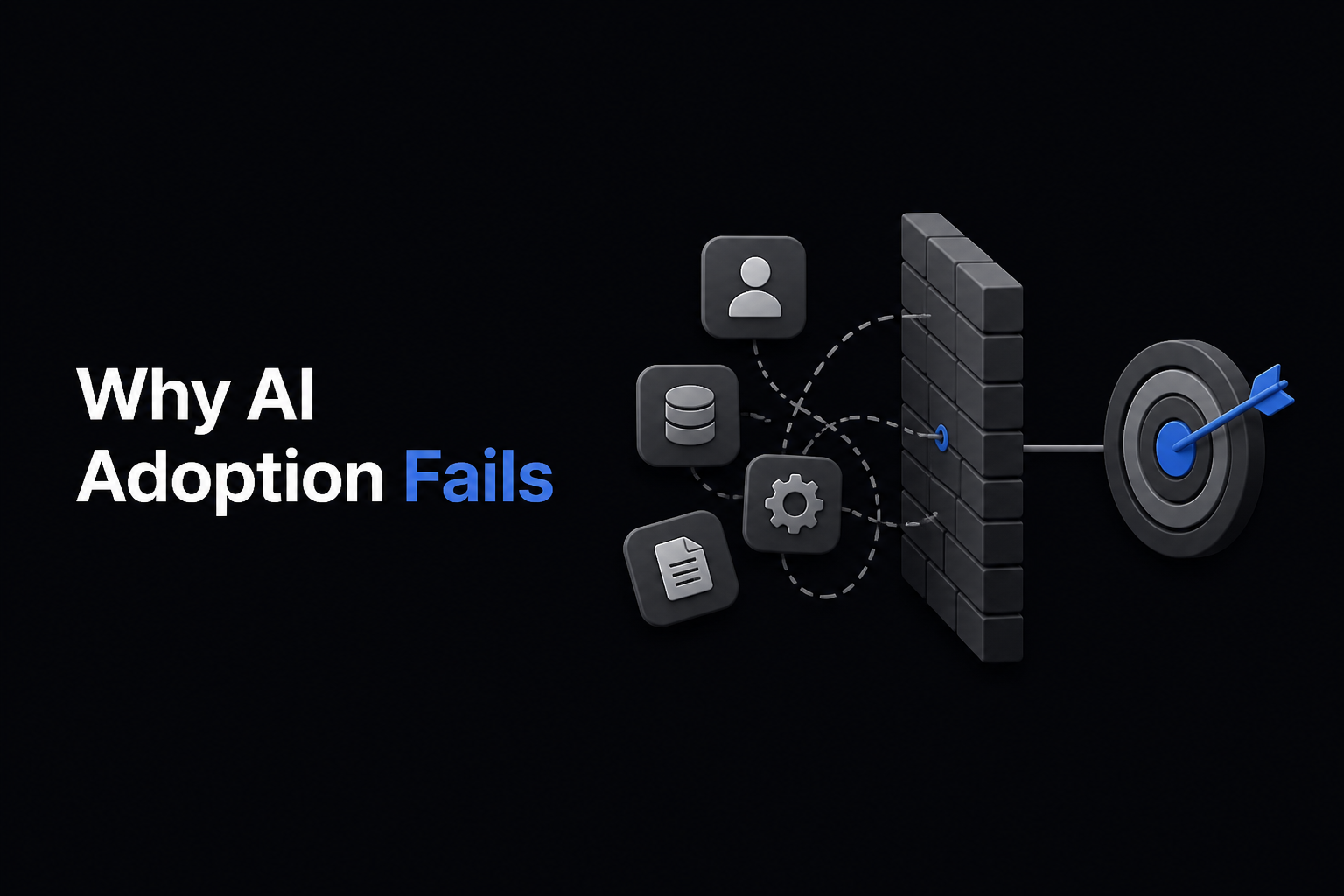
The biggest pitfall in AI adoption is treating AI as a tool to plug in rather than a system to manage. Businesses often deploy multiple disconnected AI tools hoping to solve different problems independently. This causes fragmented work AI that is hard to monitor or optimize. Without a clear strategy and user controls, AI outputs can be inconsistent or off-brand, leading to wasted effort and mistrust in AI.
The Cost of AI Tool Sprawl and Lack of Control
Using many AI tools without integration multiplies management overhead. Teams spend more time switching tools, handling conflicting outputs, and performing manual corrections. This slows campaigns and inflates costs. Furthermore, uncontrolled AI use can raise compliance risks or generate content that requires heavy human review, negating AI’s speed advantage.
| Problem | Impact | Solution |
|---|---|---|
| Multiple AI tools | Inefficient workflows | Unified AI business system |
| No output control | Quality & brand risks | Human approval workflows |
| Manual task burden | Increased costs & delays | Claude AI automation agents |
How a Business System Unifies AI Work for Better Outcomes
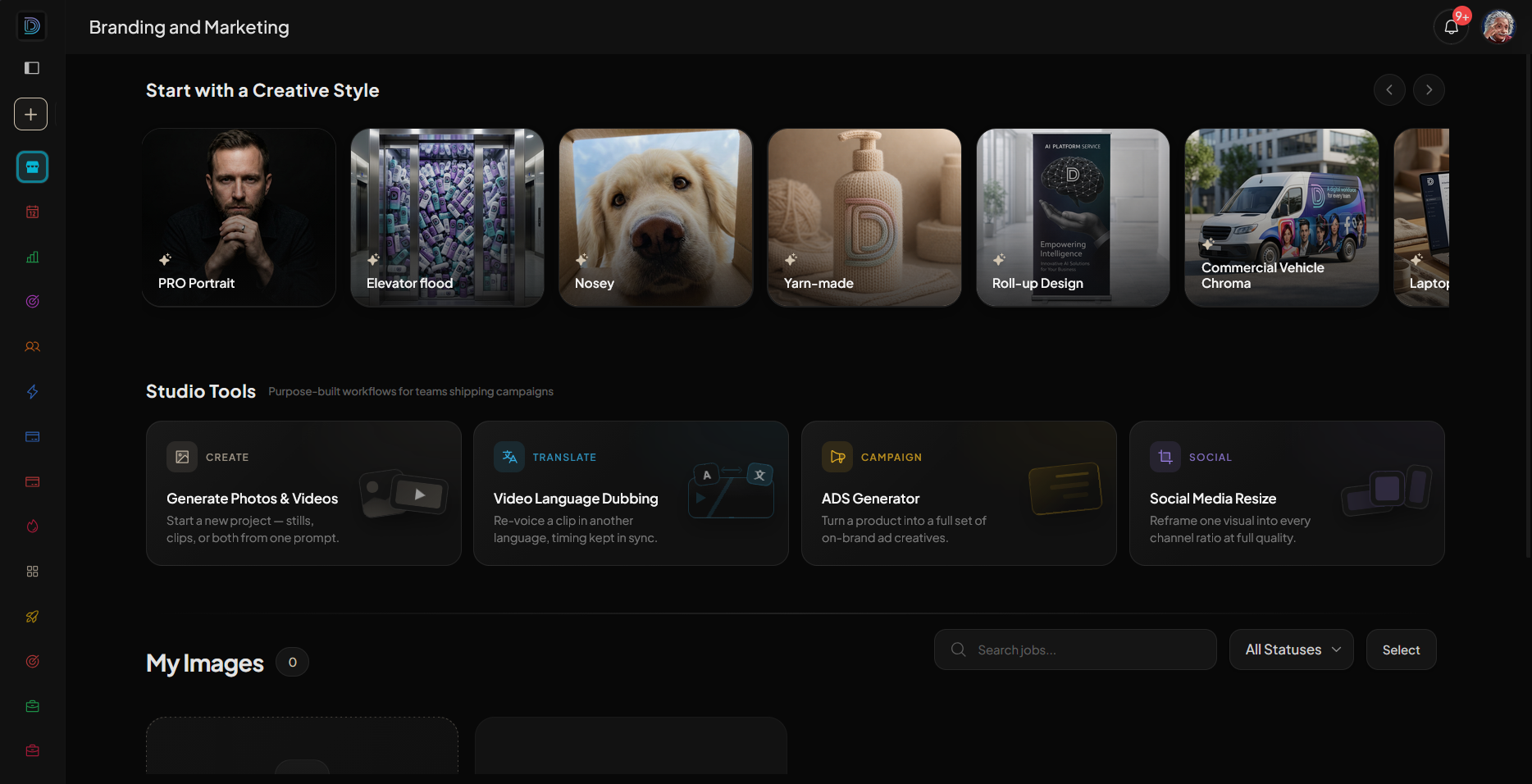
A business system built around AI centralizes data, workflows, approvals, and collaboration. It enables marketing teams to manage AI work within one platform, reducing tool sprawl and confusion. With integrated AI tools and consistent governance, teams can produce higher quality content faster. For example, DIMA's workspace consolidates AI models and human review in one place, streamlining approvals and edits.
Leveraging Claude AI Automation to Control AI Workflows
Claude AI automation helps automate repetitive tasks like content drafting, data enrichment, and review flagging. Automating these workflows reduces human errors and frees teams to focus on strategic creative tasks. Using automation agents within a business AI system lets you enforce rules and checkpoints before content goes live, ensuring quality and compliance.
Using Free AI Tools Wisely Without Losing Control
Free AI tools provide great accessibility but can introduce risks if unmanaged. They may lack enterprise-grade controls or integrations needed for business use. To avoid AI sprawl while benefiting from free AI, embed them within your business system where usage can be tracked and outputs vetted. This approach balances cost savings with governance.
Checklist to Fix AI Adoption and Control Work AI
- Define AI adoption goals aligned with business outcomes.
- Audit existing AI tools and eliminate redundant ones.
- Adopt an all-in-one business AI system like DIMA.
- Implement automated workflows using Claude AI automation for approval and quality checks.
- Train teams on best practices for AI work and control.
- Monitor AI usage metrics and adjust policies regularly.
FAQ
What is the main reason AI adoption fails in businesses?
Lack of a clear strategy and fragmented use of multiple AI tools without integration leads to inconsistent results and wasted resources.
How can Claude AI automation improve AI work control?
It automates repetitive tasks and enforces approval workflows, reducing errors and increasing efficiency in AI-driven processes.
Are free AI tools safe for business use?
They can be useful but require governance and should be integrated within a controlled business system to mitigate risks.
How does a unified business system help with AI adoption?
It centralizes AI tools, workflows, and approvals, reducing complexity and enabling consistent quality and faster delivery.
Can AI adoption improve ROI if managed correctly?
Yes, with proper control and integration, AI adoption accelerates workflows, improves quality, and reduces costs, boosting ROI.
Conclusion
- AI adoption often fails due to lack of control and fragmented tools.
- Implementing a unified business AI system addresses tool sprawl and quality risks.
- Claude AI automation streamlines workflows and enforces content governance.
- Free AI tools are valuable when managed within a business system.
Take control of your AI work and maximize business AI benefits by exploring DIMA's all-in-one AI workspace today. Start your trial or schedule a demo to see how integrated AI adoption can transform your marketing workflows.
 DIMA
DIMA