

AI that stays with the company.
In a 30-person EU consulting shop, that is not a slogan. It is the difference between a Monday that works and a Monday that starts with “who had the prompts for Müller?”
The clever version of the firm lives in Ana’s ChatGPT. House voice. The three claims you never make. Last year’s fee logic. The client who flinches at “synergy”. The junior who joined in March does not have that chat. The partner who has to sign the proposal does not have that chat. When Ana is on a plane, or out, the company is a folder of PDFs and a Slack full of “can you resend that prompt”.
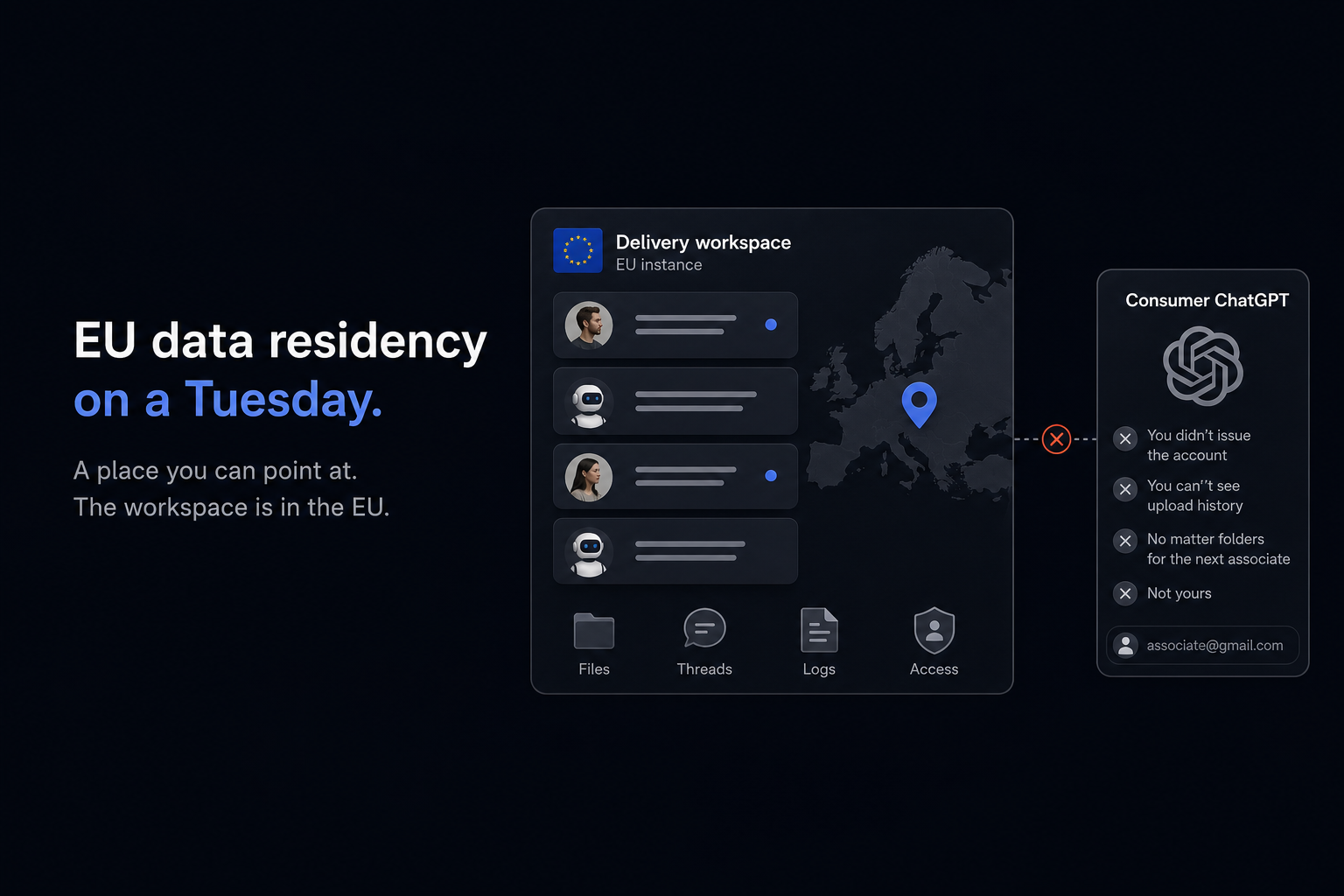
That is the job. Personal ChatGPT became the company brain because it was fast and already open. The pain is not that Ana is good at it. The pain is that the firm is only as smart as her login.
Dust has been writing that the AI problem is a collaboration problem: agents and skills that sit in a shared workspace, not in one person’s tab. Glean has been writing that AI arrived at work and the organisational impact did not, because context still lives in a person. Claude shipped memory that follows you across surfaces. All three are describing a real thing. None of them is the operator version for a firm this size: the brain has to be a room the next person can open.
What “company brain in a personal chat” looks like on a real week
Monday. A retainer client sends a messy brief. Ana pastes it into ChatGPT, plus last year’s deck, plus a paragraph she has used nine times. The outline is good. She drops a PDF into Slack. Nobody else can see the thread that produced it. Nobody else can see the constraints she typed at the top.
Wednesday. The junior is asked to “make it more like the other one”. He does not have the other one. He has a PDF. He opens his own ChatGPT. He invents a parallel house style. The partner now has two voices and a meeting.
Friday. Ana is off. Müller wants the exceptions clause tightened. The only copy of “what we never claim” is in a consumer chat on a phone that is in another country. Someone guesses. Someone is wrong.
You can call this adoption. It is not. It is a private intern with the firm’s memory, and no offboarding plan.
A 40-person ecommerce team does the same job with product copy. A 20-person accounting desk does it with the recurring client memo. The pattern is identical: the work that makes the company sound like itself does not live in the company.
The room, not the talent
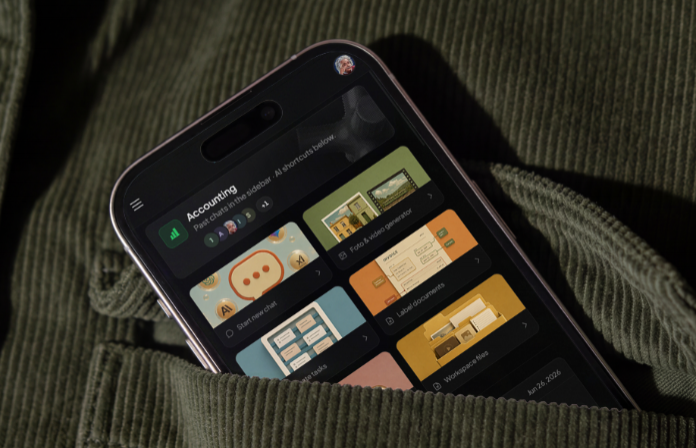
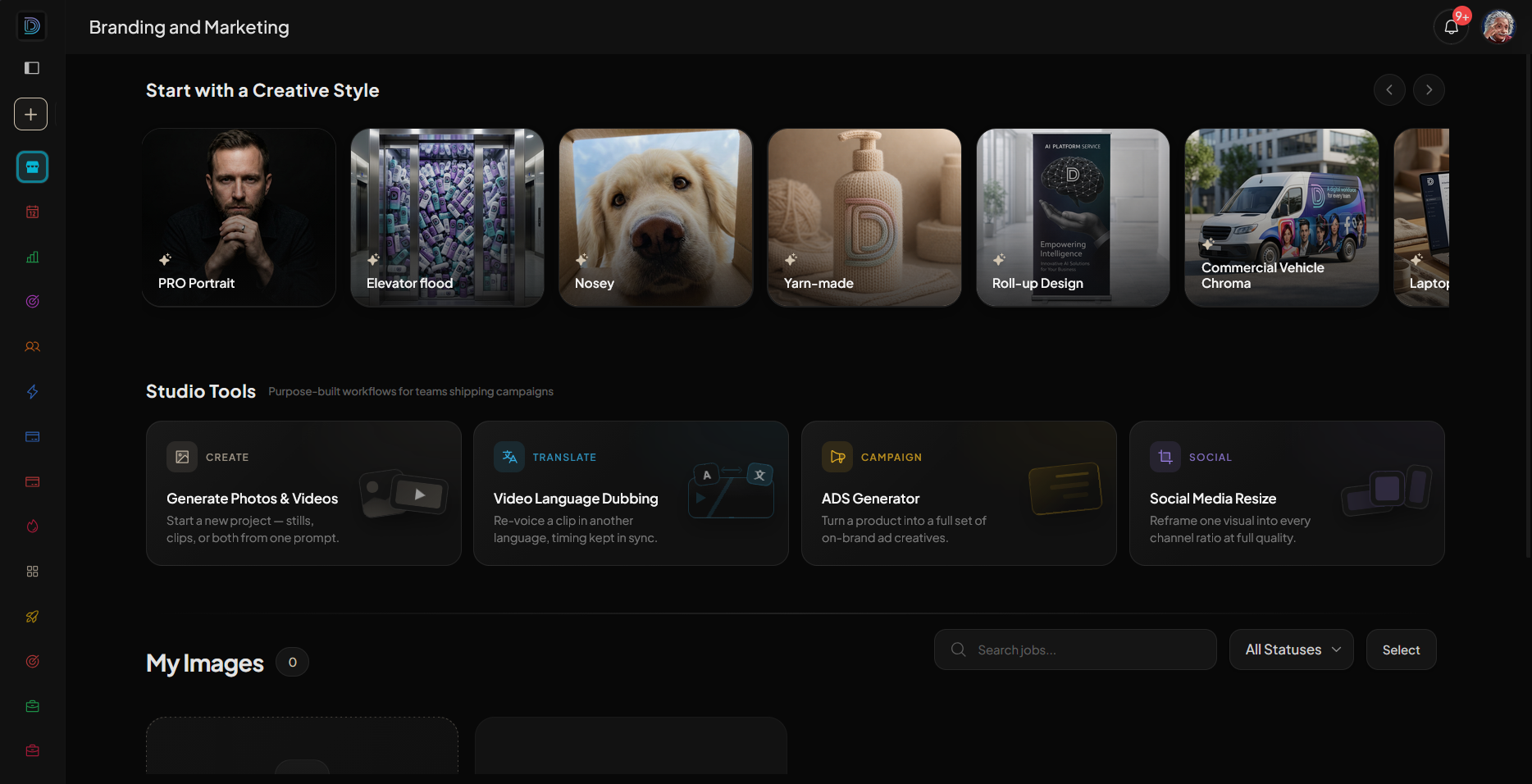
DIMA’s version of the brain is a workspace named after the practice, not after Ana. Delivery. Tax. The shop. Files that currently get pasted into ChatGPT go in that room: last good proposal, forbidden claims, fee letter, the client one-pager. Rules sit on the room: voice, what never to say, who may publish. People come and go. The room does not.
Company chat is the thread inside that room. Named after the client or the job. “Müller Q3 retainer” beats “Ana’s GPT”. The brief is at the top. The file is attached once. A junior can open it on Tuesday and continue. A partner can comment without asking for a forward. Administration is the unromantic part that makes the first sentence true. You issue Ana an account on the company instance. You can revoke it. The Müller thread is still there. That is the offboarding test. If the answer today is “we would lose the prompts”, you do not have a company brain. You have a person.
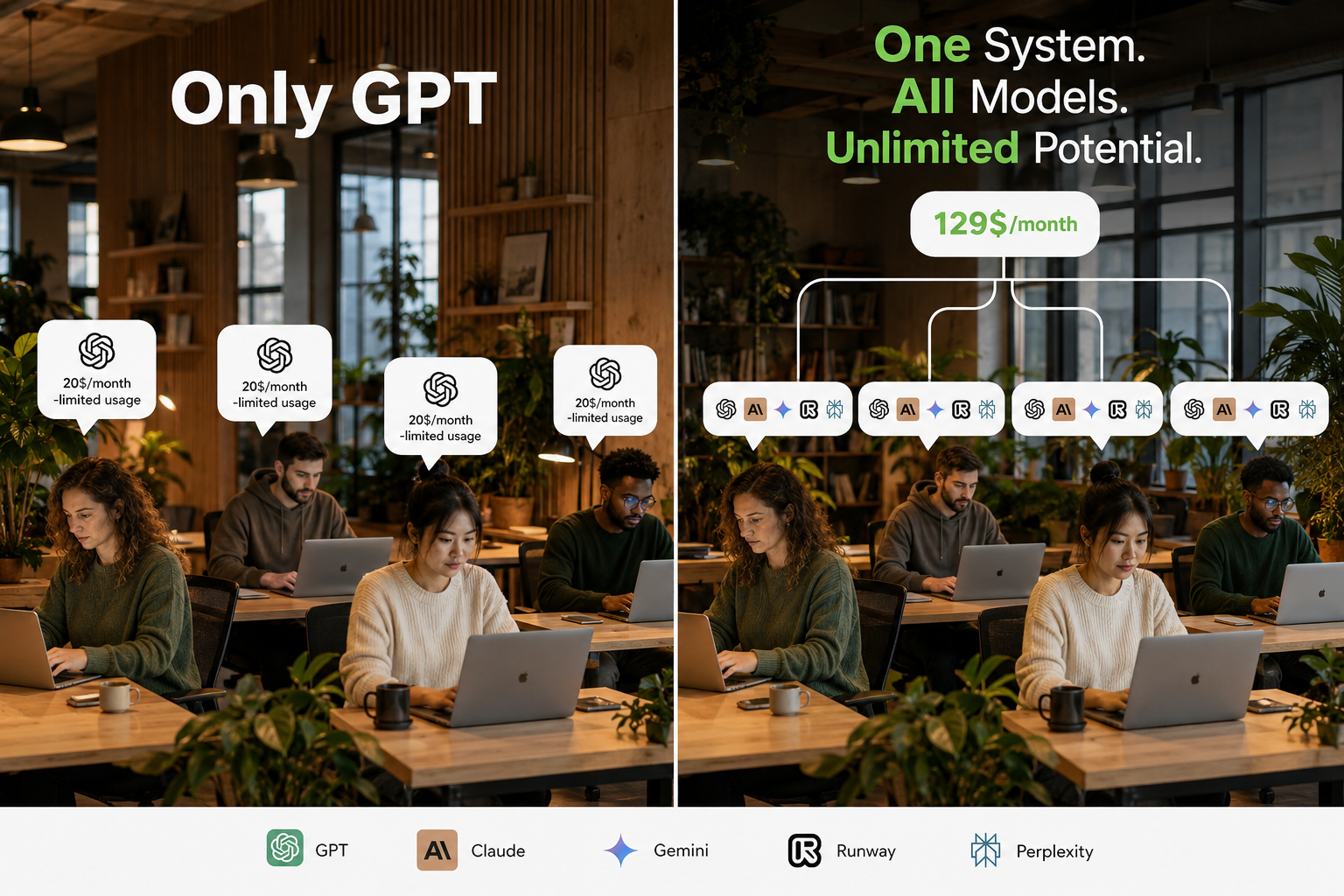
This is not a model tour. The team can keep using GPT for the outline and a longer read for the clause. The point is that the file and the three-line brief do not live in a consumer account.
How the consulting team actually runs the job
They pick one practice, not the whole firm. Delivery has the highest “ask Ana” load, so Delivery goes first.
They dump the real folder, not a highlight reel. The last six proposals that went out. The one-pager of claims legal will kill. Two client voices that are easy to get wrong. If the workspace only contains the pretty PDF, the chat will keep inventing.
They start threads as jobs. New inbound: new thread, client name, the matching old proposal already in scope. They do not start a thread called “ideas”. Ideas have nowhere to be found on Thursday.
They write the house rules once, on the workspace. Three lines is enough: who the reader is, what we never claim, where the source file lives. That is the prompt they used to retype into ChatGPT every Monday. Now it is furniture.
They treat the room as the system of record. If the draft only exists in a private download, it did not happen. The junior learns by scrolling the Müller thread, not by booking 20 minutes with Ana.
They run the leave test before anyone leaves. Manager revokes a spare login for ten minutes. Can a second person open Delivery, find Müller, and finish the exceptions clause without a Slack DM? If no, the brain is still a person. Fix the files and the thread names. Do not buy another tool.
A week later the shape is boring, which is the point.
Monday. Brief lands in email. Thread in Delivery, client name, last year’s proposal attached. Outline in chat, on the file, not on a memory of the file. Tuesday. Junior continues the same thread. He can see Ana’s constraints. He does not invent a second voice. Wednesday. Partner reads in the room. Comments sit on the draft. There is one canonical version. Thursday. Someone is out. The thread is still there. Nobody asks for the prompt. Friday. The sent PDF is in the workspace. Next quarter, this is the file, not a hunt.
Ecommerce does the same loop with SKU sheets and captions. An IT shop doing this for SMB clients does it with the runbook and the last good reply. The room is the product. The model is a tool inside it.
What this is not
It is not “give everyone ChatGPT”. That is how you got here.
It is not Copilot-inside-Outlook. If the firm lives in Word comments and that is the only surface that matters, stay there. This is for the work that already spilled into personal chats: proposals, memos, captions, the paragraph you have rewritten nine times.
It is not a knowledge graph project and a six-month connector programme. A 30-person practice does not need Glean’s enterprise index to stop Ana’s chat being the brain. It needs the files in a room, a thread with a name, and a login you can revoke.
It is not Claude’s personal memory, which is a gift to Ana and a problem for the firm. Memory that follows the person is the opposite of the first sentence.
Dust’s collaboration writing is closer. Shared skills, shared agents, the CTO who can point at a system instead of a screenshot. The DIMA-sized version of that, for this job, is simply: the practice has a workspace, and the workspace is what you show a new hire on day one.
Check you are running it
After two weeks you should be able to answer, out loud:
- If Ana’s access disappeared at lunch, could someone else finish Müller’s clause?
- Does a new hire open the Delivery workspace, or do they get a Zip of prompts?
- Are threads named after jobs, or after people?
- Did anyone re-paste a client file into a personal ChatGPT this week?
If the last one is yes, the brain moved back. Put the file in the room. Continue there.
If you already arrived looking for a ChatGPT Teams alternative, run the same test. The replacement is not another chat with a company card. It is whether the work survives the person.
Open the workspace for one real practice. Put the folder you already paste. Start one client thread in company chat. If you want a person in the room for the first hour, book it. Otherwise start from that job, not from a blank prompt.
 DIMA
DIMA