

Business AI Myths That Block Smooth AI Adoption and Work Integration
Many businesses rush into AI adoption with high hopes but stumble on avoidable myths that slow down AI work and cause tool sprawl. This article reveals five common business AI myths that block smooth adoption and integration, and offers actionable insights on how to control AI work effectively using a unified business system like DIMA. You will learn to separate hype from reality, optimize AI tools usage, and safeguard your business from common pitfalls.
Key Takeaways
- Misunderstanding AI capabilities often leads to unrealistic expectations and adoption delays.
- Relying on multiple disconnected free AI tools creates inefficiencies and security risks.
- Ignoring workflow control and governance slows AI work and causes compliance issues.
- Treating AI as a plug-and-play tool rather than integrating it into a business system limits its impact.
- Using automation platforms like DIMA can balance free AI access with secure, scalable AI adoption.
- Avoid common business AI myths that create false expectations and slow adoption.
- Choose integrated business systems over fragmented free AI tools to maintain control.
- Implement workflow governance early to secure and optimize AI work.
- View AI adoption as a continuous journey supported by scalable platforms like DIMA.
Myth 1: AI Will Automatically Solve All Business Problems
A common misconception is that AI tools can instantly fix inefficiencies and boost outputs without strategy or oversight. In reality, AI adoption requires clear objectives, proper workflow design, and human oversight to direct AI work. Without this, businesses risk wasted effort and poor-quality outputs. Using DIMA’s business system helps orchestrate AI tools with human approvals, ensuring AI enhances rather than replaces critical thinking.
Myth 2: Free AI Tools Are Good Enough for Business Use
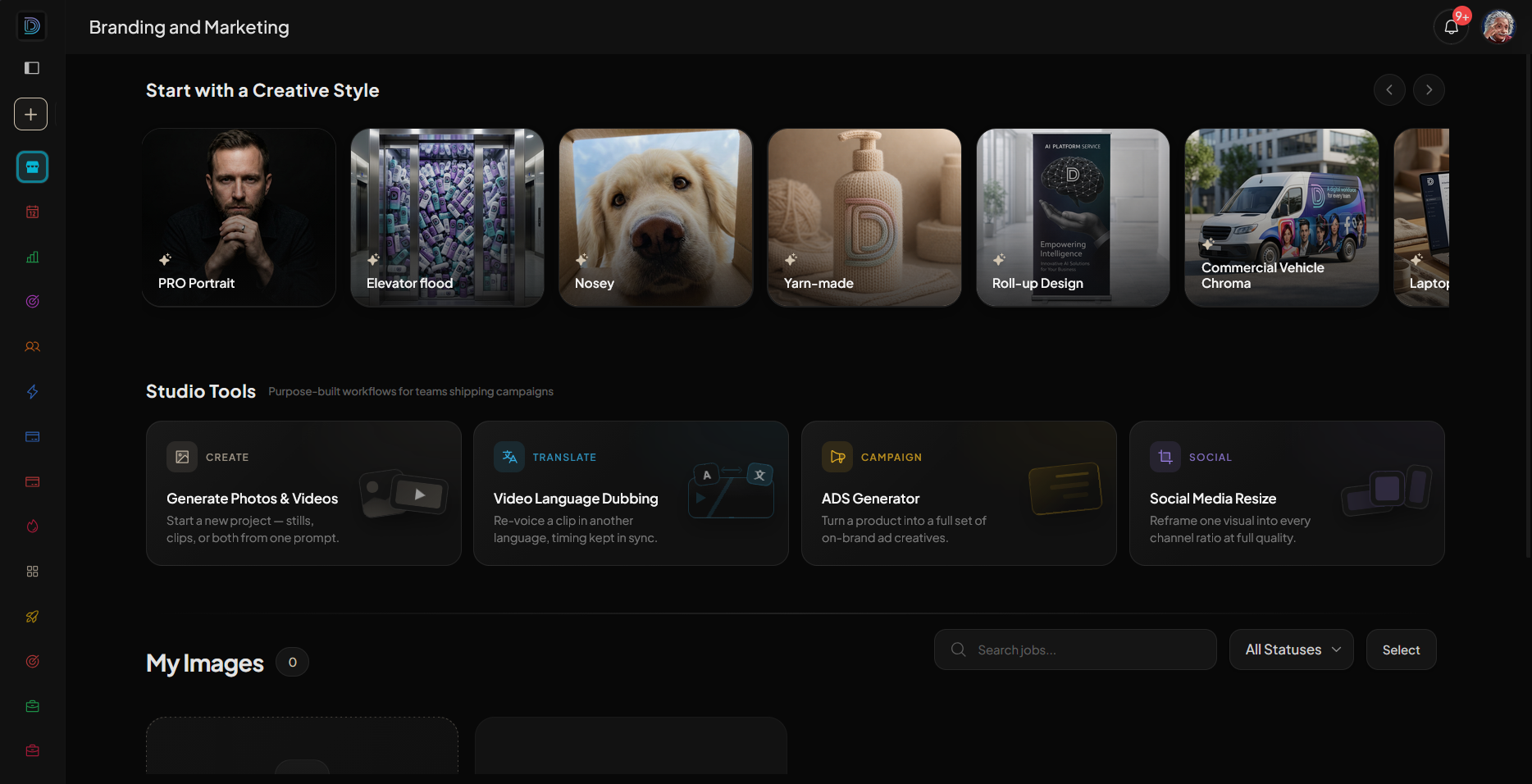
Free AI tools are tempting but often lack essential controls, integration capabilities, and security needed in business settings. Using multiple free AI platforms leads to fragmented work AI, complicating data governance and reducing efficiency. Instead, businesses should opt for unified platforms offering controlled access and automation, like DIMA Media Studio, which balances free AI benefits with enterprise-grade management.
Myth 3: AI Adoption Does Not Require Workflow Control
Skipping structured workflow control causes bottlenecks and inconsistent results. AI work must be integrated into business processes with checkpoints for quality and compliance. The lack of control increases risks such as data leaks or regulatory breaches, especially when using powerful tools like Claude AI automation. Implementing workflow AI with defined governance, as supported by DIMA’s automation, maintains secure and efficient AI work.
Myth 4: Adding More AI Tools Means Better Productivity
Stacking multiple AI tools without a unifying system leads to tool sprawl, confusing teams and slowing work AI performance. Each disconnected tool adds overhead and complicates monitoring. Instead, businesses benefit from consolidating their AI tools into a single business system that coordinates AI agents and workflows. DIMA’s all-in-one workspace reduces complexity and improves output quality.
Myth 5: AI Adoption Is a One-Time Project
AI adoption is an ongoing process, not a one-off implementation. Continuous updates, training, and iterative workflow improvements are essential to keep AI work aligned with business goals. Leveraging platforms like DIMA enables businesses to scale AI adoption safely over time, adapting to new AI capabilities such as Claude AI automation enhancements.
FAQ
How can I start controlling AI work without slowing down adoption?
Focus on implementing simple workflow controls and approvals early. Use unified business systems like DIMA to automate governance without blocking innovation.
What are the risks of relying solely on free AI tools?
Free AI tools often lack robust security, integration, and compliance features, which can expose your business to data risks and inefficiencies.
How does Claude AI automation fit into business AI adoption?
Claude AI automation offers advanced AI capabilities but requires proper workflow integration and control to maximize benefits safely.
Can AI adoption improve ROI quickly?
With the right approach to AI tools and controlled workflows, businesses can see faster ROI through efficiency gains and better-quality outputs.
What makes DIMA different for managing business AI?
DIMA provides an all-in-one AI workspace that integrates multiple AI tools, supports workflow automation, and enables human oversight for secure, scalable AI adoption.
Conclusion
Take control of your AI adoption and work today by exploring how DIMA’s all-in-one AI workspace can help your business integrate, automate, and scale AI safely and efficiently.
 DIMA
DIMA